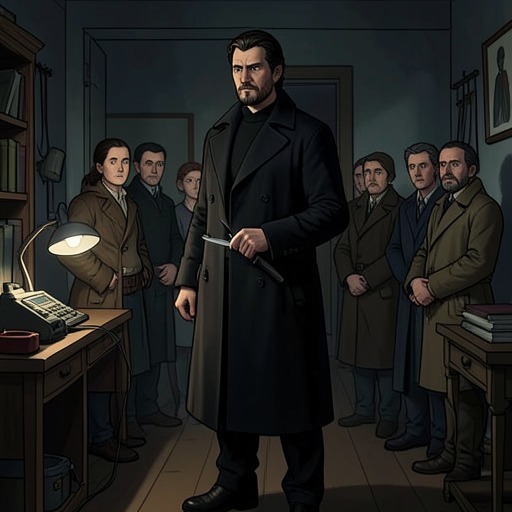
Milligan’s parole conditions
The Minds of Billy MilliganMilligan’s parole conditions placed limits on both his associations and his access to weapons, with a return to prison a possible consequence of violation. The book makes those restrictions concrete through two recurring risks: contact with former criminal associates and firearms left within reach. Because different personalities could take control without the others’ awareness, compliance depended on more than Milligan’s conscious intentions.
Restrictions and Their Purpose
One stated condition was that Milligan must not reconnect with his former criminal friends in Columbus or Lancaster. Arthur recognized the practical importance of that rule: renewed contact could lead the personalities described as undesirable back into criminal activity and violate the terms of parole. He treated the opportunity to work at Channingway Apartments and make new friends as a way to begin a different life and fit into society.
The restriction also had an internal dimension. Arthur recalled that, even in prison, other personalities had taken control without Ragen always knowing at the time. His warning linked the parole condition to the problem of lost awareness: avoiding prohibited company required the group to manage who had access to consciousness, not simply to agree on a rule in principle.
Firearms and the Risk of Return to Prison
The firearm restriction became immediate on October 13, 1977, when Allen noticed Ragen’s Smith & Wesson 9mm pistol lying in plain sight on the mantelpiece. Allen also knew of a 25-millimeter Italian gun in the closet. He understood that possession of either weapon could send Milligan back to prison for a parole violation.
Allen’s reaction was not merely fear of the legal consequence. He wondered whether Ragen, without consciously recognizing it, might want to return to prison, where he could control the spot. This remained Allen’s interpretation rather than an established explanation for why the guns had been left there. The scene nevertheless shows how a firearm could turn an internal struggle over control into an immediate threat to Milligan’s freedom.
A Condition Difficult to Enforce Internally
The rules addressed conduct in the outside world, but the narrative presents their observance as complicated by the personalities’ uneven knowledge of one another’s actions. Arthur warned against renewed criminal associations; Allen noticed weapons and recognized their legal danger. These episodes show different personalities identifying separate routes by which parole could be lost.
The conditions therefore functioned as more than a list of prohibitions. They made Milligan’s effort to start a new life dependent on collective restraint: avoiding former associates, keeping firearms out of reach, and preventing unrecognized shifts in control from producing a violation. The account establishes the risk of renewed imprisonment, while leaving open whether the guns reflected deliberate intent or another lapse in the group’s internal management.